How to wash a ceramic coated car comes down to a simple routine: rinse off loose grime first, wash with clean mitts and a pH-neutral car shampoo, rinse thoroughly and dry with soft, clean towels. The coating makes the job easier, but technique still decides whether the paint stays free of marks.
A coating can still be scratched, contaminated and water-spotted. If the aftercare you were given for your coating differs from the general advice here, follow that first.
Hayden applies ceramic coating in Auckland using Hermosa, and a routine like this is what keeps a coating performing the way it should.
Before the First Wash
A new coating needs time to cure, and the right waiting period depends on the product and the conditions it was applied in. Ask when the car can be washed and what to avoid in the meantime, rather than relying on a general rule.
If bird droppings land on the fresh coating, do not scrub them. Soften them with plenty of water, lift them away gently and ask for advice if anything remains.
What You Need to Wash a Coated Car
- a hose or pressure washer, used at a sensible distance
- a pH-neutral car shampoo
- two or more clean wash mitts
- separate brushes and mitts for wheels and tyres
- two buckets, or another method that keeps grit away from the paint
- soft, clean drying towels
There is more than one safe method. Clean tools and compatible products matter more than owning any particular gadget.
Using a Pressure Washer on a Coated Car
A pressure washer is fine on a coated car when it is used sensibly. Keep the nozzle at a safe distance, use a wide fan rather than a pinpoint jet and take care around badges, trim edges and any stone chips.
It is there to lift loose dirt before you touch the paint, not to blast off bonded contamination. If something will not rinse away, it needs a different approach rather than more pressure.
How to Wash a Coated Car, Step by Step
Step 1: Choose Shade and Cool Panels
Wash in shade when you can, with the paint cool to the touch. Strong New Zealand sun dries water and shampoo on the panels quickly, which is how spots and streaks start.
Step 2: Clean the Wheels First
Wheels carry brake dust and road grime that you do not want on your paint. Clean them with separate tools and a cleaner suited to the wheel finish, and do not let it dry on the surface.
Step 3: Rinse Off Loose Dirt
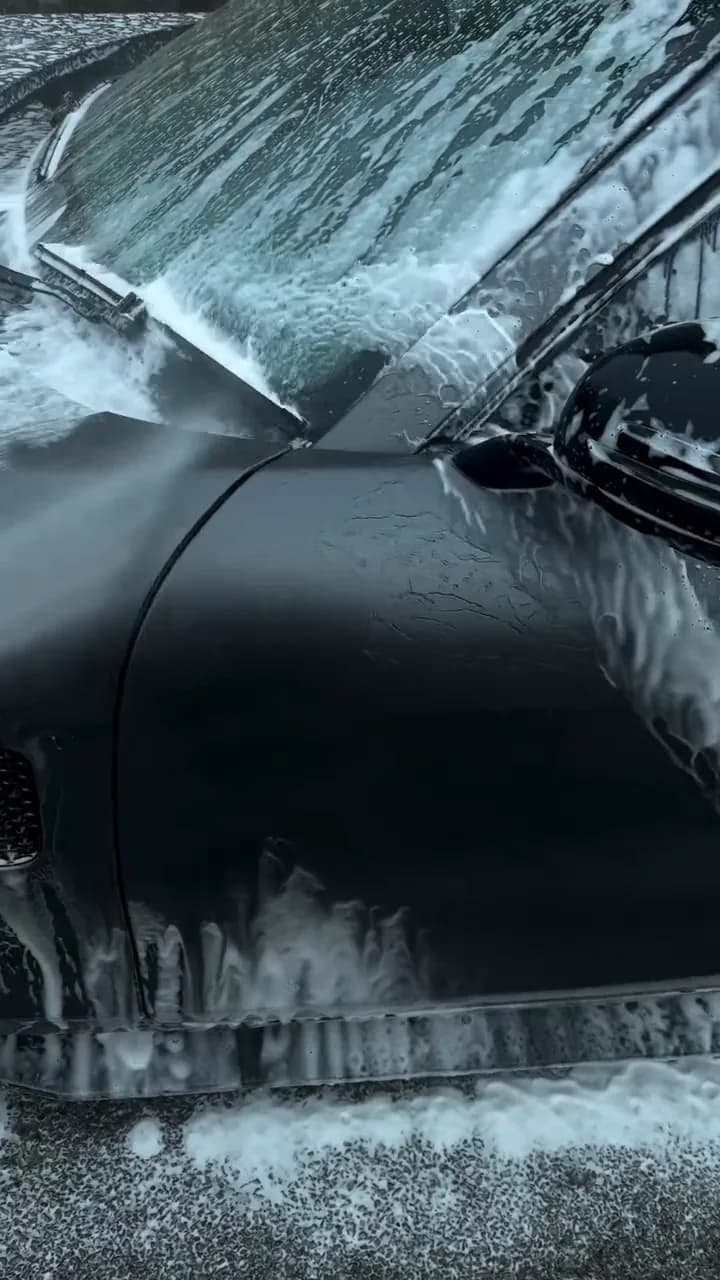
Rinse the whole car before you touch it, paying attention to wheel arches, lower panels, the grille and door sills. A pre-wash foam can loosen traffic film further, though thick foam alone does not prove it is cleaning.
Step 4: Wash Gently From the Top Down
Work in small sections from the roof down, with light pressure and straight-line passes. Rinse the mitt often, and use a separate mitt for the dirtier lower panels.
If a spot will not shift, do not press harder. Treat it separately after the main wash.
Step 5: Rinse Thoroughly
Rinse shampoo out of seams, mirrors, badges and trim. Some coatings bead water tightly while others sheet it off quickly, and both are normal.
Step 6: Dry Without Dragging Grit
Do not let water evaporate on the paint, especially in sun, because the minerals left behind can mark the surface. Dry with clean, soft towels using light pressure, or blow the water off with filtered air.
Never wipe down a dusty or rain-spotted car without washing it first.
How Often Should You Wash a Coated Car?
Wash it when it is meaningfully dirty. For a daily driver that is often every one to three weeks, depending on where it is parked and how it is used.
In Auckland, salt air near the Waitematā and Manukau harbours, tree sap, bird droppings, rain and motorway road film can all shorten that interval. Droppings, sap and bug residue should come off as soon as you see them, whatever the schedule.
If you would rather hand the regular washing to someone else, a detailing membership keeps the car on a schedule with Hayden.
Washing After the Beach or Coastal Driving
Salt residue from coastal air or a day at the beach should not sit on the paint for long. A thorough rinse of the body, wheel arches and lower panels, followed by a proper wash, stops it building up.
Cars parked near the water pick up salt even without a beach trip, so a gentle fresh-water rinse between full washes is worthwhile.
Do You Need a Topper or Detail Spray?
Only if it is compatible with the coating and genuinely useful. A topper can renew slickness and water behaviour, but it can also hide how the base coating is performing when you are trying to judge it.
More product is not automatically better, so check with whoever applied the coating before adding anything on top.
What to Do When Water Stops Beading
Start with a thorough wash, because traffic film can hide a healthy coating. If the behaviour is still patchy, bonded contamination may need a decontamination step that suits the coating.
Avoid aggressive clay or polishing without advice, because clay can mar the surface and polishing removes the coating.
Products and Habits to Avoid
- automatic brush car washes
- household detergent or dishwashing liquid
- dirty or dropped towels
- dry dusting or wiping
- abrasive polish used as a cleaner
- unverified waxes or sealants over the coating
- strong chemicals left to dry
- scrubbing hard at bugs or droppings
Touchless washes avoid brushes but can use strong chemicals and still leave traffic film behind, so treat them as an occasional compromise.
When to Get Professional Help With Your Coating
Ask for help if the paint feels rough after washing, water spots will not shift, panels behave unevenly, scratches need correcting or the car has been exposed to overspray or harsh chemicals.
For advice on the coating on your car, or to book Hermosa ceramic coating in the first place, send an enquiry with the make, model and your suburb. Hayden will get back to you, and the same enquiry claims up to a $500 credit towards any package.